O ensaio de força de cisalhamento is a vital method used to assess the shear strength of textile fabrics, helping manufacturers and quality control personnel ensure the durability and reliability of their products. In industries where textile fabrics are used in high-stress environments, such as apparel, automotive, and upholstery, understanding the shear strength of these materials is essential for ensuring product longevity and performance.
In this article, we will explore the ensaio de força de cisalhamento, including its significance in measuring shear strength, the process involved, and the benefits of using the appropriate equipment for accurate results.
What is Shear Strength in Textile Fabrics?
Shear strength refers to the ability of a fabric to resist forces that try to deform it by causing its layers to slide past each other. When textile fabrics are subjected to external forces, the strength of the fabric to withstand such forces without shifting or tearing is vital to the overall performance of the material. This makes shear strength an essential property for evaluating fabric durability, particularly in applications where the fabric undergoes significant mechanical stress.
Testing the shear strength helps identify whether a fabric will perform well under tension and whether it is suitable for specific applications. It is particularly useful for fabrics used in environments prone to heavy abrasion, such as in the automotive industry, industrial gear, or furniture upholstery.
Shear Force Test and Cutting Test for Textile Fabrics
O ensaio de força de cisalhamento involves applying a shear force to a textile specimen until it reaches a point of failure. The force is applied in such a way that it induces shear in the fabric, causing its fibers to slide and eventually break. This allows for a direct measurement of the shear strength of the material.
O ensaio de corte is a variation of the ensaio de força de cisalhamento where a blade or other cutting tool is used to apply the force. It helps simulate real-world conditions where fabrics are exposed to mechanical stress, cutting, or abrasion. The cutting test provides a clear indication of how the fabric performs under such conditions, helping manufacturers make informed decisions about material selection.
Importance of Shear Strength Testing for Textile Fabrics
Understanding shear strength is essential in determining whether textile fabrics are suitable for various applications. Here are some of the key reasons why the ensaio de força de cisalhamento is crucial:
1. Ensuring Product Durability
By evaluating the shear strength of fabrics, manufacturers can ensure that their products are durable enough to withstand the mechanical stresses they will face in their end-use applications. For example, upholstery fabrics must resist shear forces when subjected to seating pressure, while automotive fabrics must endure continuous wear and tear.
2. Quality Control
Quality control is vital in the production of textile fabrics. The ensaio de força de cisalhamento provides an accurate means of assessing the consistency and reliability of fabric batches. Fabrics that fail the shear test can be sent back for reworking or discarded, ensuring that only high-quality products make it to market.
3. Material Selection for Specific Applications
Different textile fabrics exhibit varying levels of shear strength, making it necessary to choose the right material for a particular use. For instance, materials used in industrial settings require higher shear strength than those used in fashion garments. The shear force test helps manufacturers select the appropriate fabrics for their needs.
4. Meeting Industry Standards
For textile products to meet industry standards, it is often necessary to conduct a ensaio de força de cisalhamento to ensure that they can endure the demands of real-world applications. Complying with industry standards ensures that manufacturers maintain product integrity and consumer trust.
Using the Cell Instruments TEX-01 Texture Analyzer for Accurate Shear Force Testing
For reliable and accurate shear force testing, the Cell Instruments TEX-01 Texture Analyzer is an excellent choice. This advanced testing machine is specifically designed for evaluating the mechanical properties of textile fabrics, including shear strength. It provides precise control over test conditions, ensuring consistent and repeatable results.
Features of the TEX-01 Texture Analyzer:
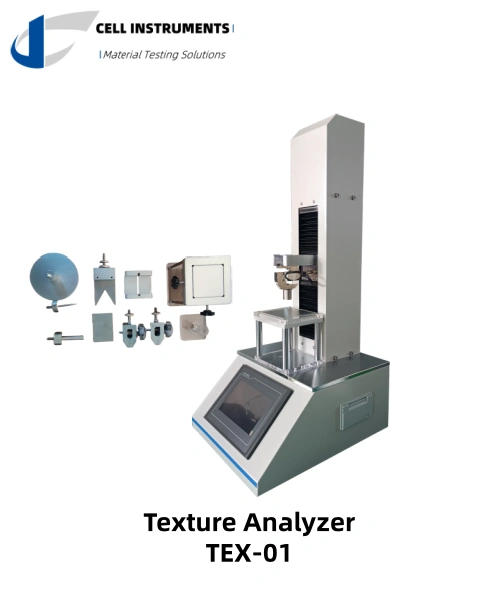
- Precision Testing: The TEX-01 allows for controlled application of shear force, ensuring that the results are accurate and reproducible.
- Versatile Testing Options: This analyzer supports a wide range of tests, including shear force tests, tensile tests, and other mechanical property evaluations for textile fabrics.
- User-Friendly Interface: The TEX-01 is designed for ease of use, allowing operators to set up and run tests quickly. It also provides detailed data analysis for more informed decision-making.
- Compliant with Industry Standards: The TEX-01 is compliant with industry standards, ensuring that your testing procedures adhere to the necessary protocols.
Conclusion
O ensaio de força de cisalhamento is a critical method for evaluating the shear strength of textile fabrics, helping manufacturers determine the durability and performance of their materials. By performing shear strength tests, manufacturers can ensure that their fabrics are suitable for various applications and meet the required industry standards.
Utilizing advanced equipment like the Cell Instruments Analisador de textura TEX-01 ensures that testing is precise, reliable, and efficient. Whether you’re testing fabrics for fashion, upholstery, or industrial use, the ensaio de força de cisalhamento provides essential data to guarantee the quality and longevity of your textile products.
 PT
PT  EN
EN  AR
AR  BG
BG  CS
CS  DA
DA  DE
DE  EL
EL  ES
ES  ET
ET  FI
FI  FR
FR  HU
HU  ID
ID  IT
IT  JA
JA  KO
KO  LT
LT  LV
LV  NB
NB  NL
NL  PL
PL  RO
RO  RU
RU  SK
SK  SL
SL  SV
SV  TR
TR  UK
UK