Introduction
The noodle is a staple in diets worldwide, and its texture plays a critical role in consumer preference. A noodle’s firmness, bite, and cohesiveness define the eating experience. To quantify these attributes, food scientists perform a nihkejõu katse, a standardized method that measures the shear strength and cutting resistance of noodles. This data is essential for quality control, product development, and process optimization. By understanding how noodles respond to mechanical stress, manufacturers can ensure consistent quality across batches and improve customer satisfaction.
Shear Force Test and Its Importance for Noodles
The nihkejõu katse evaluates how much force is required to cut or deform a noodle under controlled conditions. This test is crucial for several reasons:
- Consistency in Product Quality: Shear force measurements help ensure that each batch of noodles meets desired texture specifications.
- Optimizing Recipes: Differences in flour type, water content, or additives can significantly affect noodle texture. Shear testing allows manufacturers to fine-tune formulations for ideal bite and firmness.
- Predicting Consumer Experience: Firmness and shear strength correlate strongly with sensory perceptions, ensuring noodles feel right when chewed.
- Troubleshooting Production Issues: Deviations in shear measurements can indicate process problems such as over- or under-cooking, improper hydration, or ingredient inconsistency.
Testing Procedure for Noodles
Conducting a nihkejõu katse involves careful sample preparation and precise instrumentation. Key steps include:
- Sample Preparation: Cook noodles under standardized conditions to ensure uniformity. Standardization includes controlled cooking time, water temperature, and noodle-to-water ratio. Overcooked or undercooked samples may produce inconsistent results.
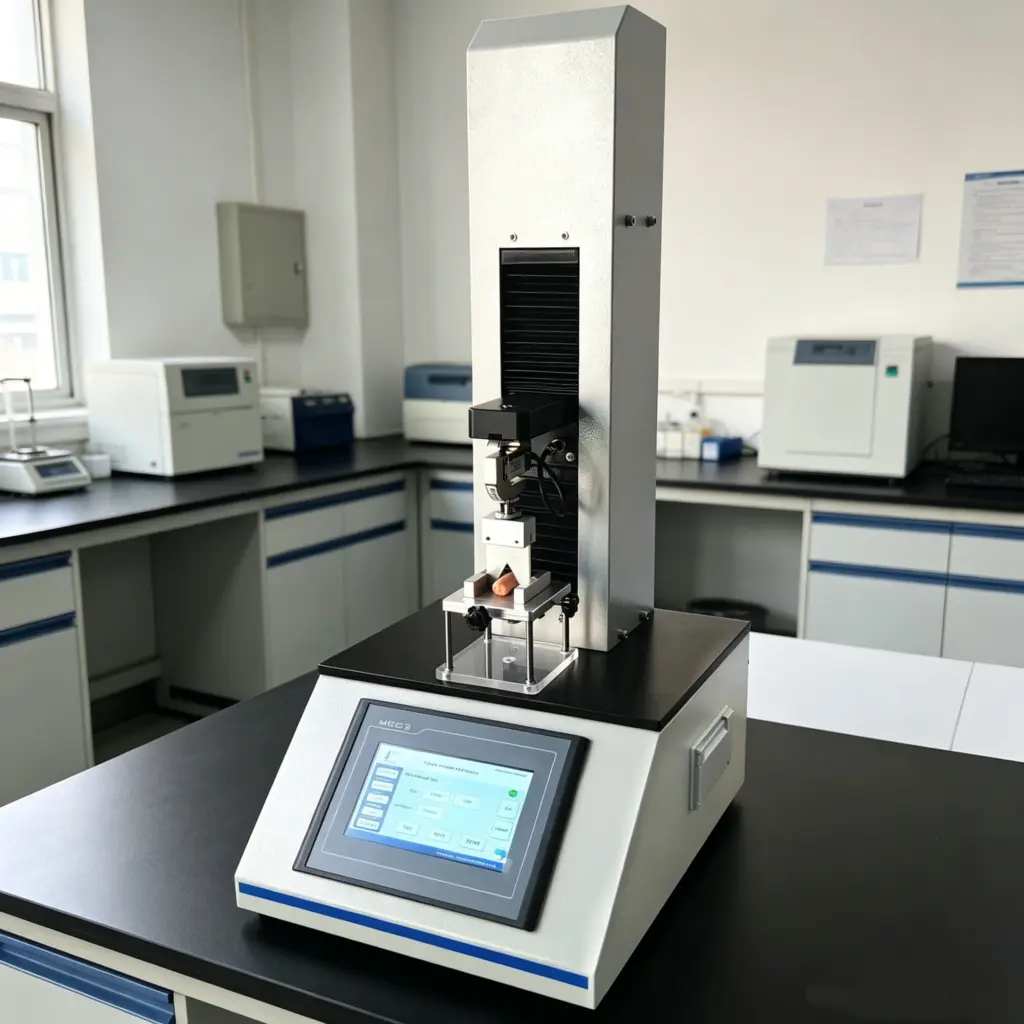
- Instrument Setup: Use a texture analyzer, such as the Cell Instruments TEX-01, equipped with a shear blade or cutting probe. Proper calibration is essential for accurate force measurement.
- Mounting Samples: Place the cooked noodle strip across the test platform, ensuring alignment with the cutting blade. The sample must remain stable to avoid slipping, which could distort results.
- Shearing Action: The probe moves at a consistent speed, cutting through the noodle. The instrument records the maximum force required to shear the sample. Some analyzers can also capture the force curve during cutting, providing insights into noodle elasticity and resistance.
- Data Collection: The primary output is the peak shear force, typically reported in grams or newtons. Additional parameters like force-time curves, energy to cut, and deformation behavior can also be recorded.
Interpreting Shear Force Data
The data obtained from a nihkejõu katse can be used to evaluate multiple aspects of noodle quality:
- Peak Shear Force: Reflects the maximum cutting resistance, indicating firmness.
- Cutting Profile: Force curves show how noodles respond to gradual deformation, revealing elasticity and cohesiveness.
- Comparative Analysis: By testing different formulations or cooking conditions, manufacturers can identify the ideal combination for desired texture.
- Quality Control: Monitoring shear force across production batches helps detect deviations early, preventing inconsistent products from reaching consumers.
Practical Applications and Case Studies
- Elastic Recovery: Indicates how noodles return to their shape after cutting, relating to elasticity.
- Product Development: Shear testing allows food scientists to test new recipes before scaling production. For example, adding egg proteins can increase noodle firmness, which is quantified by higher peak shear force readings.
- Process Optimization: In commercial kitchens, understanding how shear force changes with cooking time helps standardize preparation for ready-to-eat noodles.
- Sensory Correlation: Studies show a strong correlation between shear force measurements and sensory evaluations of bite and chewiness, making it a reliable predictive tool.
- Troubleshooting: If noodles fail sensory tests, shear analysis can pinpoint whether the problem is due to formulation, overcooking, or mechanical handling during production.
Advanced Insights
Beyond the peak shear force, modern texture analyzers like the TEX-01 can provide:
- Energy Absorption: Measures toughness, important for noodles designed to withstand industrial cooking or packaging processes.
- Consistency Across Batches: Statistical analysis of shear data enables manufacturers to maintain tight quality control.
Conclusion
The nihkejõu katse is an indispensable tool for evaluating noodle texture and cutting resistance. Measuring shear strength provides quantitative insights into firmness, elasticity, and overall quality. By employing precise instruments like the Cell Instruments TEX-01 Texture Analyzer, manufacturers can ensure consistent texture, optimize recipes, and improve consumer satisfaction. Shear force testing not only supports quality control but also informs product development, making it a cornerstone of modern noodle production and research.
 ET
ET  EN
EN  AR
AR  BG
BG  CS
CS  DA
DA  DE
DE  EL
EL  ES
ES  FI
FI  FR
FR  HU
HU  ID
ID  IT
IT  JA
JA  KO
KO  LT
LT  LV
LV  NB
NB  NL
NL  PL
PL  PT
PT  RO
RO  RU
RU  SK
SK  SL
SL  SV
SV  TR
TR  UK
UK